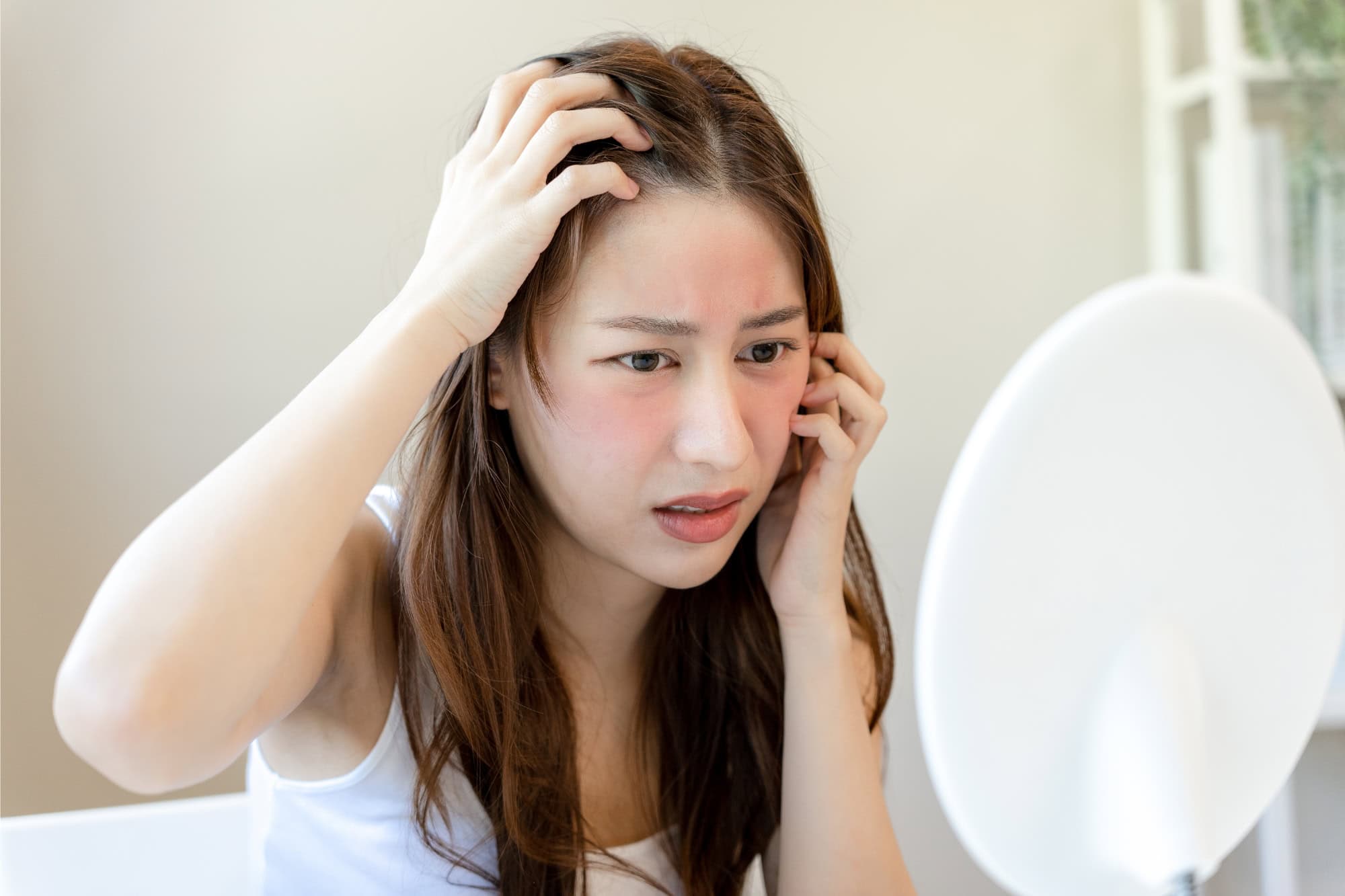

Seborrheic dermatitis is a prevalent, non-contagious inflammatory skin condition that primarily affects areas rich in oil glands, such as the scalp. It manifests as red, greasy, itchy skin accompanied by flaky white or yellow scales. When it occurs on the scalp, it’s commonly referred to as dandruff.
Seborrheic Dermatitis
Causes:
The exact cause of seborrheic dermatitis remains unclear, but it’s believed to involve an overgrowth of the yeast Malassezia in oily skin areas, leading to inflammation and accelerated skin cell turnover. Factors such as stress, hormonal changes, and cold, dry weather can exacerbate the condition.
Management and Treatment:
- Scalp Care: Regular shampooing with anti-dandruff shampoos containing active ingredients like selenium sulphide, coal tar, zinc pyrithione, or ketoconazole can help control flaking and inflammation. For thick scales, applying olive oil or cocois ointment one to two hours before shampooing, or leaving it overnight, can aid in scale removal.
- Topical Treatments: In cases where shampoos are insufficient, mild corticosteroid lotions or antifungal creams may be prescribed to reduce inflammation and yeast overgrowth. These should be used under medical supervision to avoid potential side effects.
Infantile Seborrheic Dermatitis (Cradle Cap):
In infants, seborrheic dermatitis often presents as cradle cap, characterised by thick, yellowish, greasy scales on the scalp. Gentle washing of the baby’s scalp with a mild shampoo and the application of moisturiser to loosen scales can be beneficial.
When to Seek Medical Advice:
If symptoms persist despite regular scalp care, or if the affected areas become painful, swollen, or show signs of infection, it’s advisable to consult a healthcare professional for further evaluation and management.
Scalp Care: Moisturising, Itch Relief & Inflammation Control
Proper scalp care plays a crucial role in managing conditions like seborrheic dermatitis and dry, itchy scalp. A well-moisturised scalp not only promotes comfort but also supports skin barrier health and reduces flare-ups.
- Moisturising the Scalp:
Keeping the scalp hydrated helps prevent dryness, flaking, and irritation. Use lightweight, non-comedogenic scalp moisturisers or oils (such as mineral oil, jojoba oil, or squalane-based formulas) that won’t clog follicles. In more severe cases, medicated emollients may be recommended. - Relieving Itch:
Anti-itch formulations containing ingredients like eucalyptol, aloe vera, or colloidal oatmeal can provide soothing relief. In medicated treatments, agents such as salicylic acid or coal tar help reduce scaling and itching. - Reducing Inflammation:
Topical corticosteroids or antifungal lotions may be prescribed by healthcare professionals to address inflammation caused by conditions such as seborrheic dermatitis. Non-steroidal options like pimecrolimus or tacrolimus may also be used under medical guidance, especially for long-term management or sensitive skin.
Tips for Daily Scalp Care:
- Use a gentle, pH-balanced shampoo and avoid over-washing.
- Apply moisturisers or scalp treatments after washing, when the skin is slightly damp.
- Avoid harsh hair products that contain alcohol or synthetic fragrances.
- Use a soft brush or fingers to gently loosen flakes—never scratch or pick.
For persistent symptoms, always consult a dermatologist for personalised treatment.